
Digital scrapbook vs. photo journal: which one fits the way you remember?
One practice arranges fragments into an expressive artifact. The other gives images enough context to become memories. Most people need a little of both.
The short version
- Choose a photo journal when context and consistency matter most.
- Choose a digital scrapbook when composition and creative play are part of the reward.
- Use a hybrid workflow when you want quick capture and occasional crafted pages.
- The right format is the one you will return to, not the one with the most features.
The shortest useful distinction
A photo journal starts with the memory and adds enough words and arrangement to preserve its context. A digital scrapbook starts with a group of fragments—photos, stickers, colors, captions—and turns arranging them into part of the experience.
The outputs may look similar. The difference is where the satisfaction lives. If you feel successful when the day is accurately kept, you are leaning toward photo journaling. If you feel successful when the page itself becomes expressive, you are leaning toward scrapbooking.
Neither is more serious or more creative. They simply place effort in different parts of the process.
Compare the practices across six real decisions
A feature checklist is less useful than imagining what happens on an ordinary Tuesday. Use these decisions to locate the workflow that fits your energy.
1. What starts the entry?
Photo journal: one moment that needs context. Digital scrapbook: a collection of fragments you want to arrange.
2. How much time feels reasonable?
Photo journal: two to ten minutes can be complete. Digital scrapbook: the longer composition session may be part of the pleasure.
3. How important is writing?
Photo journal: words usually carry missing facts. Digital scrapbook: text may be narrative, caption, texture, or title.
4. How much does layout matter?
Photo journal: layout supports reading. Digital scrapbook: layout can be the central creative act.
5. What do you revisit?
Photo journal: dates, events, and personal context. Digital scrapbook: finished spreads, themes, and visual collections.
6. What breaks the habit?
Photo journal: prompts that feel repetitive or too demanding. Digital scrapbook: too many materials, decisions, or unfinished pages.
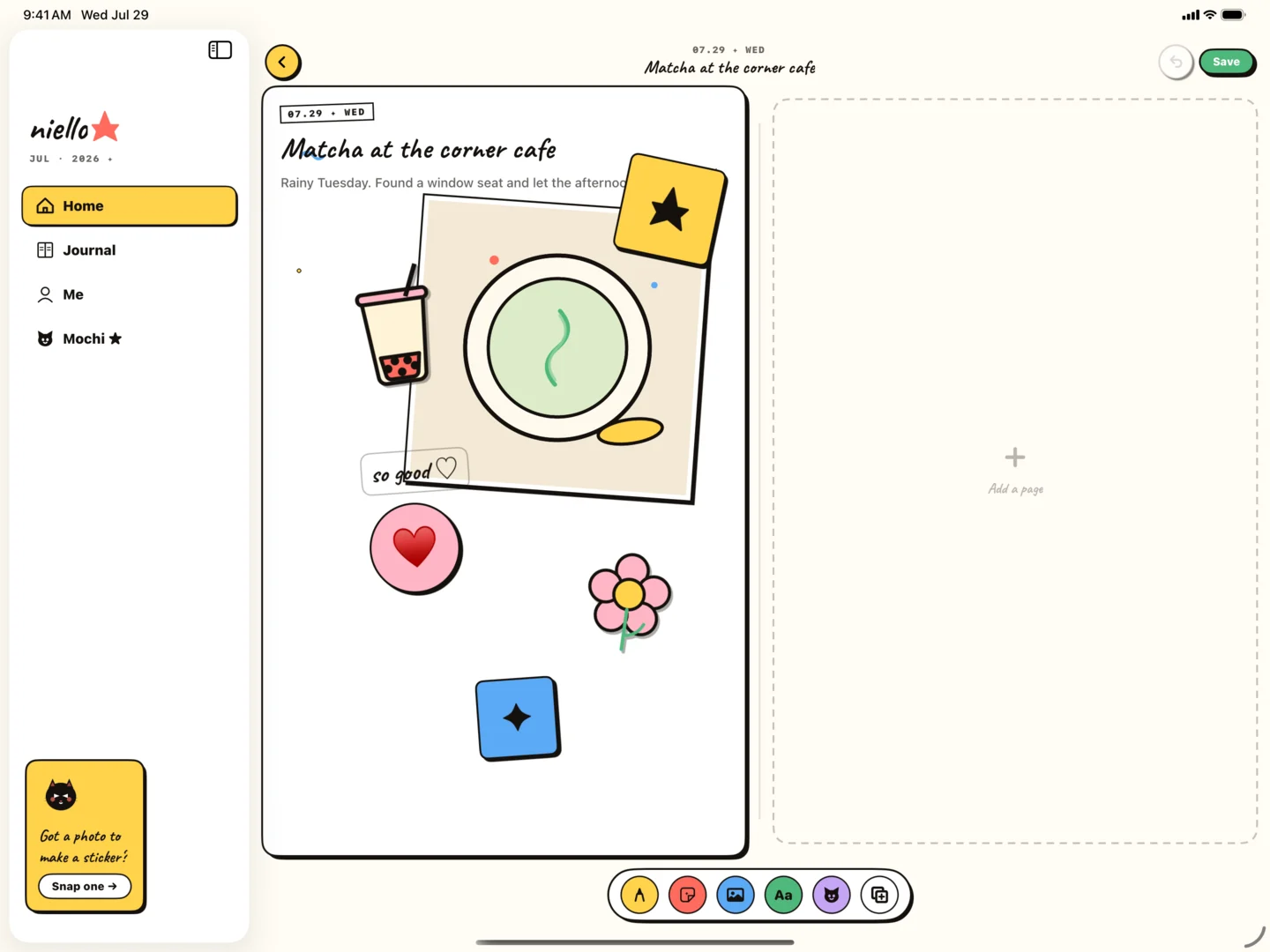
Use one photo to make a minimal photo-journal page, duplicate the concept, then make a more layered scrapbook composition.
Choose a photo journal if you want context with low friction
Photo journaling is usually the better default when your camera roll is already full and your main regret is that the images have lost their stories. You do not need another creative project. You need a small place to pair a frame with the fact only you know.
It also suits periods when energy is uneven. A two-sentence page can be complete, and completeness protects the habit. You can make occasional elaborate entries without making elaboration the price of admission.
- You want to remember what happened and why it mattered.
- You prefer small entries you can finish often.
- Words are important, even when they are brief.
- Searching or reviewing by time is part of the value.
Choose a digital scrapbook if arranging is part of how you process
Digital scrapbooking suits people who think by moving things around. The page becomes a small studio: crop, layer, repeat, remove, and discover the relationship between fragments through composition.
It also works well for themed collections that cross time: a trip, season, reading year, recipe project, or a set of recurring visual details. The page does not have to correspond to one day.
- You enjoy making a page as much as rereading it.
- You collect visual fragments and like seeing them together.
- You want undo and experimentation without physical material waste.
- You are comfortable with some pages taking longer.
The hybrid workflow: capture quickly, compose selectively
For most people, a hybrid is more sustainable than a strict identity. Make small photo-journal entries while details are fresh. Once a week or once a month, choose several related moments and compose a scrapbook-style page.
This separates memory capture from creative production. Nothing important waits for a free afternoon, and the creative session begins with real material instead of an empty canvas.
In Niello, the same ingredients can support both modes. The difference is the rule you give yourself: small and contextual today, expansive and thematic later.
A seven-day test that produces an answer
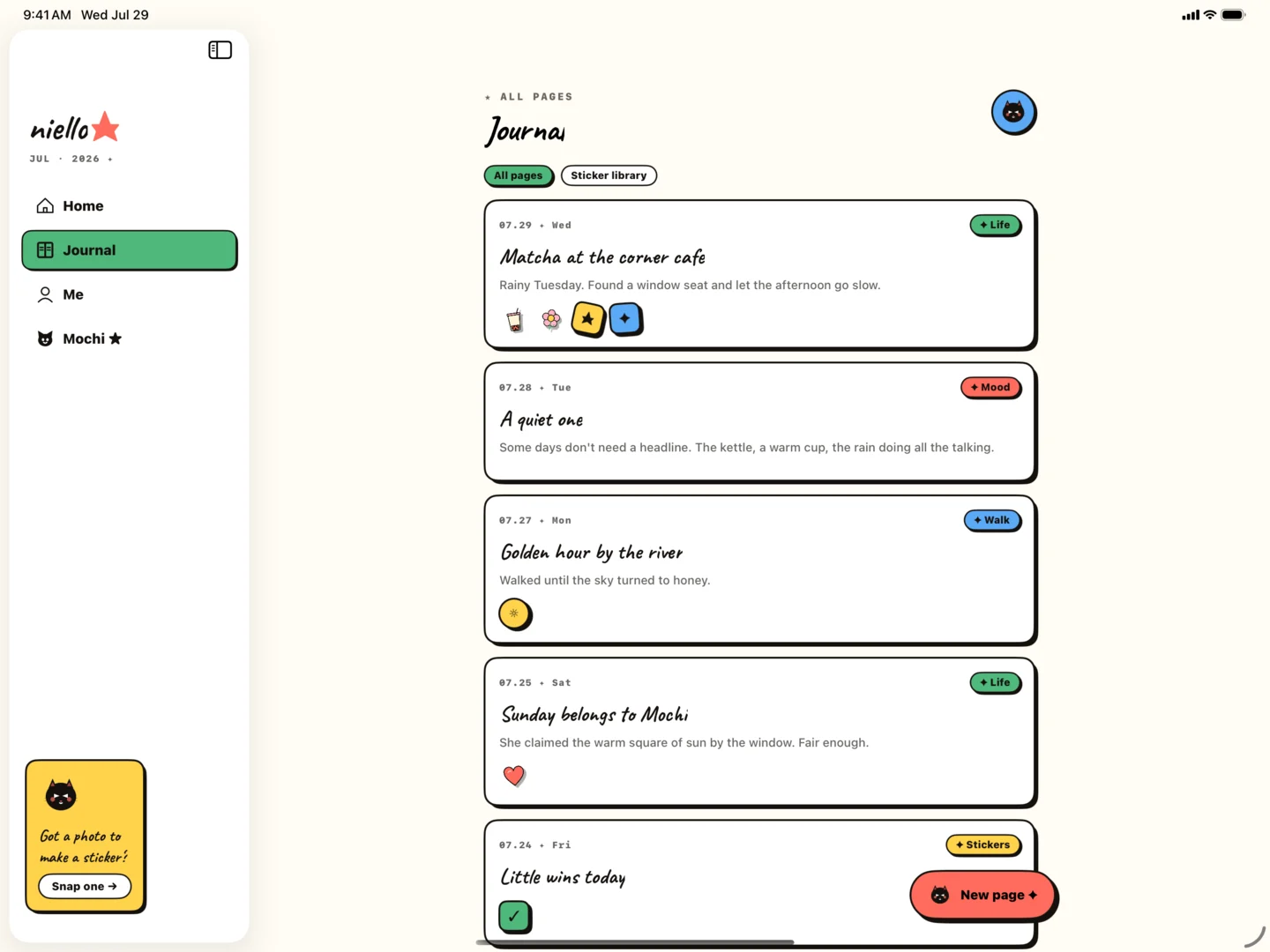
For four days, create one minimal photo journal entry: one image, a concrete title, and two to four sentences. On the fifth or sixth day, use three of those entries as material for one designed collection page.
On day seven, ask two questions. Which process made you notice more while living the day? Which result were you more curious to reopen? Your answers may point to one practice, or they may confirm the hybrid.
Do not score visual quality. Measure return. A memory practice succeeds when it changes attention and creates something worth revisiting.