
Your camera roll remembers what things looked like
It rarely remembers the sentence you laughed at, the reason you took the long way home, or why a blurry photo became the favorite one. Those details are small enough to disappear and specific enough to make a memory feel alive.
A photo journal gives each image a little context. The writing does not need to be literary. A date, a place, one line of dialogue, and a reaction may be enough. The layout lets those pieces stay together.
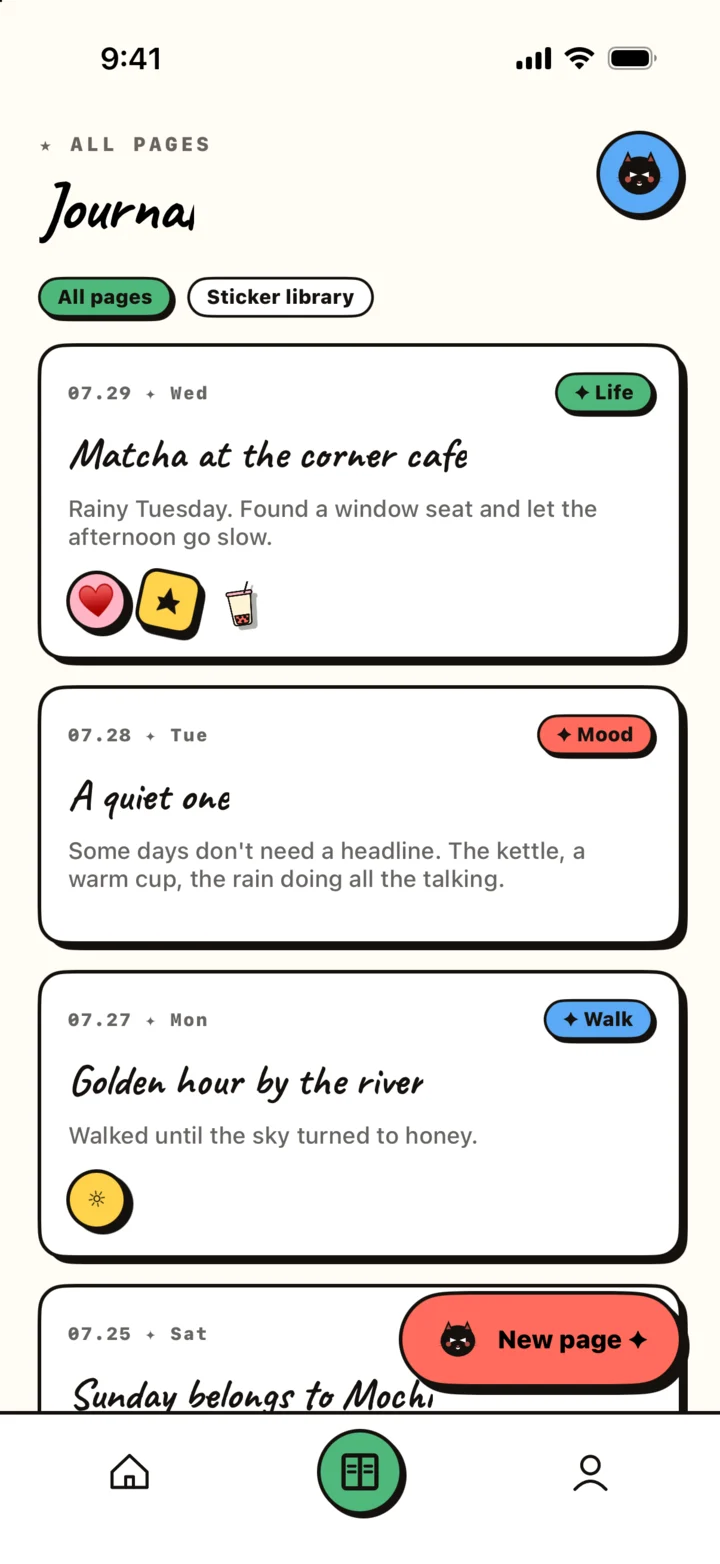
Make the habit smaller than your resistance
Daily journaling advice often starts too large. A complete account of the day is difficult on a tired night. Try a smaller unit: one moment, one image, three lines. If more arrives, continue. If not, the page is still complete.
The best prompt is often concrete rather than emotional. What was on the table? What sound was in the room? Which detail would be impossible to reconstruct from the photo alone? Specific observation creates meaning without forcing a profound conclusion.
- Choose one moment, not the whole day.
- Write the missing sensory detail.
- Add one sentence about why you noticed it.
- Stop while the ritual still feels light.
Design for returning, not only capturing
A journal becomes more valuable when you revisit it. A chronological list helps you find the season; recognizable titles and visual pages help you re-enter it. Name entries with concrete phrases—“Rain on the library windows” beats “Tuesday.”
During a weekly or monthly review, notice recurring people, places, foods, and moods. You do not need to quantify them. Simply seeing the pattern can change what you pay attention to next.